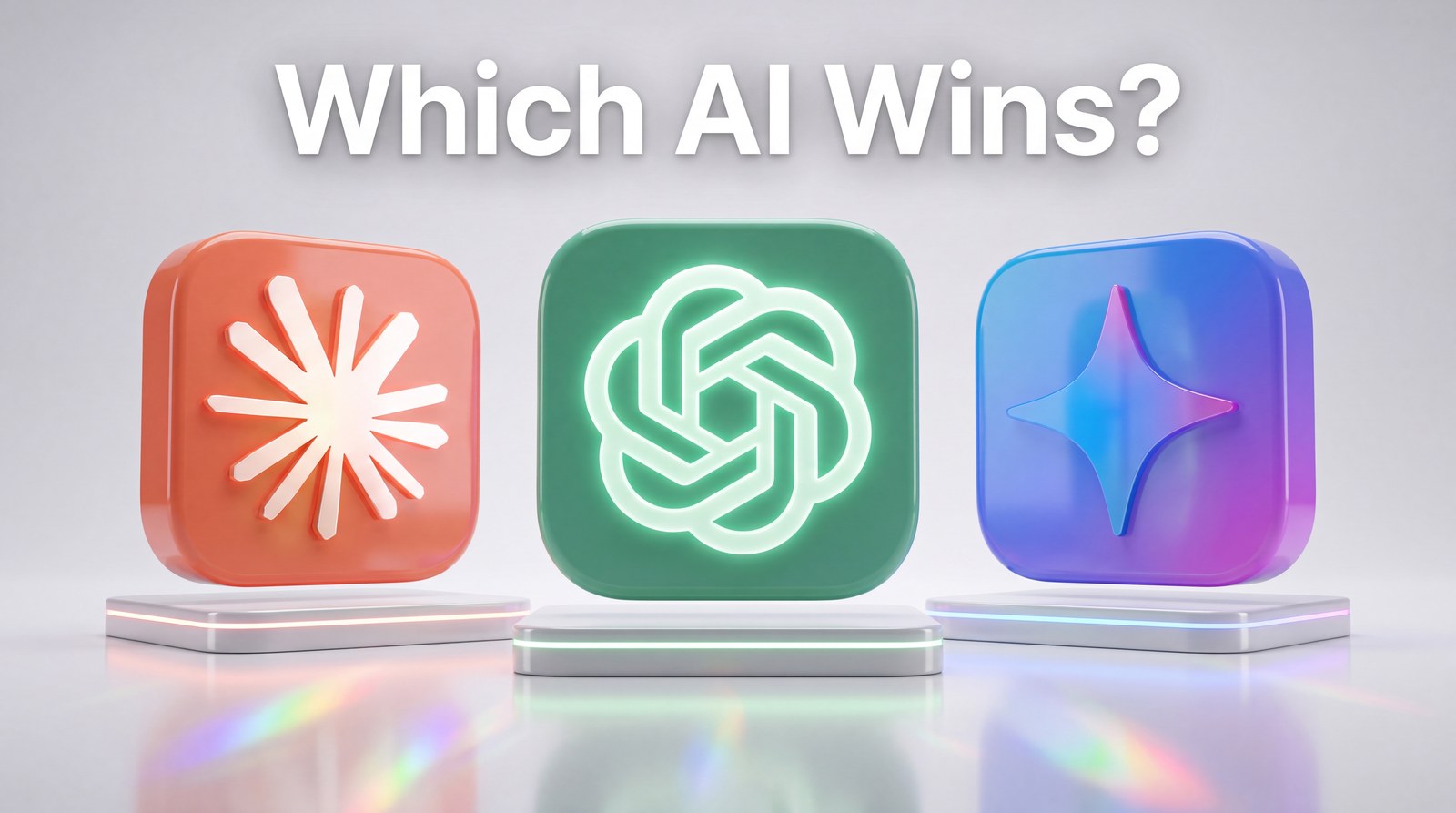
Claude vs ChatGPT vs Gemini: Which One Should You Actually Use in 2026?
Stop asking which AI is “the best.” Three different tools win three different jobs, and using the wrong one is why your results feel mediocre.
Every week someone asks me the same question. “Mia, just tell me which AI should I pay for?” They want one name. One subscription. One answer.
Here’s the honest version: the question is wrong. Asking which AI is best is like asking which vehicle is best. Best for what? A motorbike and a moving truck are both right, depending on the day.
June 2026 made this messier, not cleaner. We got a wave of new models all at once, OpenAI’s GPT-5.6 series, Anthropic’s Claude Fable 5, deeper AI baked into Apple’s Siri. More choice, more confusion. So let’s cut through it by job, not by brand.
The Question to Ask Instead
Don’t ask “which is best.” Ask “what do I do most, and which tool is built for that.” Your answer depends entirely on whether you live in long documents, fast facts, or the Google ecosystem.
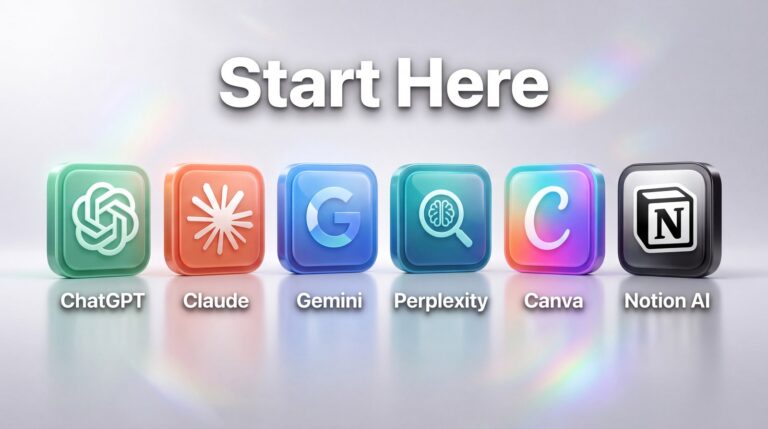
Three tools, three clear strengths. Here’s where each one actually wins.
When Claude Wins: Long, Careful Writing and Thinking
Claude is the one I reach for when the task involves a lot of text or needs a careful, human tone. You can paste an entire client brief or a long messy document into it and ask questions without summarising first.
It tends to write in a warmer, less robotic voice out of the box, which matters when the output has your name on it. If your work is writing-heavy, proposals, articles, detailed emails, editing, this is a strong default. Its rapid growth in 2026, reportedly over 300% in a quarter, came largely from people who write for a living switching over.
When ChatGPT Wins: The All-Rounder You Already Know
ChatGPT is the Swiss Army knife. It’s still the most widely used assistant, it handles images and voice, and it has the deepest set of extra features for everyday tasks.
If you’re new to all this, start here. The interface is familiar, the help is everywhere, and it does most jobs well enough. It lost some market share in 2026, down to around 55%, but “lost some lead” still means more than half the market. For a generalist who wants one tool that does a bit of everything, it’s the safe pick.
When Gemini Wins: You Live Inside Google
If your work life runs through Gmail, Google Docs, Sheets, and Drive, Gemini has a quiet advantage: it’s already there. It can pull context from your inbox and documents in ways a separate chatbot can’t.
For someone whose whole day happens inside Google Workspace, that integration often beats raw capability. The best tool is the one that’s already where you work.
A Real Example: The Same Task, Three Tools
Say you need to write a follow-up email to a client after a long, messy meeting. Watch how the “best” tool changes with the details.
If you have the full meeting transcript and want a careful, warm recap that captures nuance, Claude handles the long text and lands the tone. If you just want a quick, competent draft and you’re already mid-flow in ChatGPT, it does the job in seconds with zero friction. And if that meeting lives in your Google Calendar and the notes are in a Google Doc, Gemini can pull from both without you copying anything across.
Same task. Three right answers. The variable isn’t which AI is smartest, it’s the shape of your specific situation. This is exactly why “which is best” has no fixed answer, and why people who pick one tool and learn it deeply beat people who keep tool-hopping.
Do I Need to Pay for All Three?
No, and you shouldn’t. Each has a free tier good enough to test with. Spend a week running your real work through one as your main. If it handles your most common task well, pay for that one and stop shopping. The cost of three subscriptions isn’t just money, it’s the mental tax of never knowing which one to open. One main tool plus a free research tool covers almost everyone reading this.
So What Do You Actually Do?
Here’s the practical move. Most people don’t need three subscriptions. They need one main tool plus a research tool.
- If you write a lot: Claude as your main, Perplexity for research.
- If you want one familiar generalist: ChatGPT as your main, and learn it deeply.
- If you live in Google all day: Gemini as your main, since it’s already in your tools.
Is It Worth Switching?
Only if your current tool keeps failing at the job you do most. Switching tools has a hidden cost, you have to relearn how to prompt it, rebuild your saved prompts, change your habits.
Don’t chase headlines. A new model launch is not a reason to switch. A repeated frustration with your daily task is. Pick based on your actual week, not the news cycle, and you’ll stop feeling like the tool is the problem.
Not sure how to talk to whichever AI you pick? My free pack of 100 AI prompts works across all three, Claude, ChatGPT, Gemini, for everyday work tasks. Download it free.